more than it seems?
Friday, 20 March 2026 14:04![[personal profile]](https://www.dreamwidth.org/img/silk/identity/user.png) calimac
calimacIs Alysa Liu actually happy to be posing with this police officer?
She's giving the British version of "the finger."
She's giving the British version of "the finger."
calimacrachelmanija
![[syndicated profile]](https://www.dreamwidth.org/img/silk/identity/feed.png) atlas_obscura_places_feed
atlas_obscura_places_feed
On an unassuming stretch of Main Street in the small town of Elizabeth sits a doorway into cycling’s wonderfully peculiar past. Behind it waits a collection of vintage bicycles so varied and charming that it’s hard not to grin as you walk in the door.
Paul’s Vintage Bicycle Museum isn’t slick or high-tech and that’s precisely the point. Instead, it feels like stepping into a lovingly curated garage where every bike has a personality. Sturdy cruisers from the mid-20th century look ready to coast straight into a black-and-white photograph. Odd frame designs and forgotten brands reveal just how experimental bicycle makers once were.
The real magic, however, isn’t just in the metal and rubber it’s in the stories. Owner Paul offers informal tours and enthusiastically shares the history and quirks of any bicycle that catches a visitor’s eye. Ask about a strange looking frame or an antique brake system and prepare for an impromptu lesson in ingenuity. The experience feels less like wandering through a museum and more like discovering a treasure trove guided by its devoted caretaker.
Admission is free, though donations are requested to help keep the collection rolling. The setting is humble, the atmosphere welcoming, and the surprises plentiful. For anyone who appreciates mechanical oddities, nostalgic craftsmanship, or simply the joy of discovering something unexpected in a small Midwestern town, this museum delivers in spades and spokes.
summersgate wickedgame posting in
 ![[community profile]](https://www.dreamwidth.org/img/silk/identity/community.png) fandom_icons
fandom_icons
 mundodefieras cupcake_goth
Work yesterday left me incredibly frustrated. The ducks that are nibbling me to death have mutated to giant size and with razor-sharp beaks. Because I was so frustrated, I decided I needed to reread one of the most disturbing sets of Hannibal AU fics I've ever encountered: A Gifted Student and A Letter to My Abuser. They're gorgeously, awfully written. (If you decide to read them, pay close attention to the tags oh god pay close attention to them.)
A Letter to My Abuser is, in some ways, the harder read for me, because when I first read it I tried to figure out why I identified so hard with a side character; Ollie, so giddy to meet his literary idol, but forcibly warned/ran off by this AU version of Will Graham. When I read it last night, my brain went "ohhhhh, yeah, Neil Gaiman", and then I had to read some fluffy fic to scrub my brain.
I hope his victims get closure. And that they win the legal actions against him, because they deserve the money they're suing for.
tvline_sytycd_feed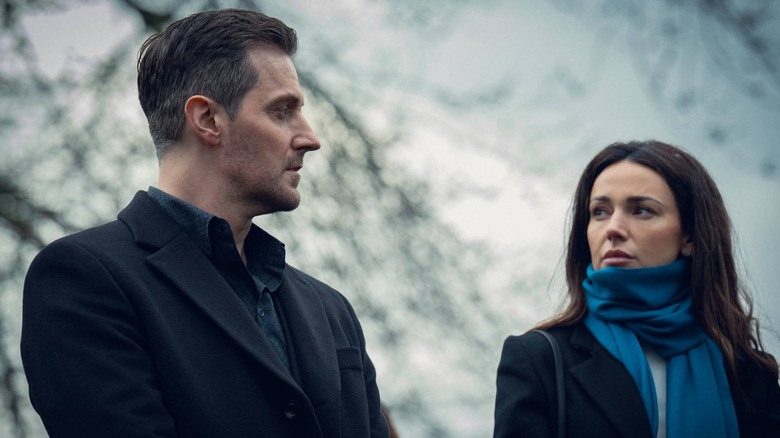
reviews_and_ramblings blogcutterthesleepingbeauty posting in fandom_icons

 little_mermaid. ♥️ lydamorehouseatlas_obscura_places_feed
The Turkish term Gececondu literally translates to "placed overnight." It refers to informal settlements, shantytowns, or slums that emerge without official blessing—typically on the outskirts of major cities and often constructed from waste and makeshift materials. One might expect this in the Middle East, Africa, South America, or developing nations, but is such a thing possible in organized, straight-laced Germany—specifically in Berlin?
It is. However, the unique feature of the Berlin Gececondu is that it owes its existence to the division of the city and the Berlin Wall.
In 1963, Osman Kalin was part of the first wave of so-called "guest workers" who came to Germany following the German-Turkish recruitment agreement. In 1980, he moved to Berlin with his wife and six children, first to Spandau and later to Kreuzberg. Located directly against the Wall was a 350-square-meter triangular wasteland; the plot technically belonged to East Berlin but was located on the West Berlin side of the border.
Starting in 1983, having retired by then, he began clearing the site of rubbish to cultivate vegetables. In the shadow of the Wall, he built a hut out of wardrobe doors, bed frames, and hand-mixed concrete. Initially, East German border guards watched him with deep suspicion, fearing the construction of an escape tunnel. When two VoPo's, policemen from the GDR came to stop him, he was stubbornly pretending not to understand their language and that the land was his property for a long time.
After the fall of the Wall, the Gececondu—or "guerrilla garden," as it is also known—managed to survive for several reasons. On one hand, political leaders appreciated the cultural and folkloric anomaly as a tourist attraction and a symbol of a multicultural, open Berlin; on the other hand, a cash-strapped Berlin lacked the funds to fully restore the Engelbecken (a former canal basin) that once occupied the site.
Thus, Osman was able to grow kale, tomatoes, cherries, and cabbage here until his death in 2018. Today, his son Mehmet and another Turkish family tend to the plot. In writings about the family, one perceives a certain "Anatolian craftiness" and an Eastern interpretation of rules: sympathetic politicians are met with warmth, while inquisitive journalists are often charged a €50 "expense fee" for interviews. Mehmet plans to turn the place into a museum in honor of his father. He charges tourists E5 for visits and has even put up a fake street sign: Osman Kalin Plath 0,1.
The future of the Gececondu is unclear, yet it remains a Berlin curiosity and holds a permanent place in the city's Turkish diaspora.
cimorene tinnyfandom10in30 is Hearts and Flowers. Since I already made 20 heart-themed icons for the ships20in20 round, I concentrated on flowers this time.




 hafniabooknook. fromtheheartofeurope_feed
Second paragraph of third section:
Sergeant Colon balanced on a shaky ladder at one end of the Brass Bridge, one of the city’s busiest thoroughfares. He clung by one hand to the tall pole with the box on top of it, and with the other he held up a home-made picture book to the slot in the front of the box.
I have very happy memories of first reading this while bouncing around the hills and valleys of North Macedonia in 2001 during the conflict there, which actually made it rather appropriate reading; I wrote then:
it is the story of a multiethnic diplomatic mission to a neighbouring, less developed country from the urban metropolis of Ankh-Morpork. As I met up with my Bulgarian, Romanian and American colleagues in Sofia, then proceeded to Skopje to rendezvous with our Greek, Turkish, Serb, Kosovar and Albanian comrades, before touring [North] Macedonia to find out what the hell was going on there, Pratchett’s satire took on a very hard edge for me. My Albanian colleague devoured the book on the day we travelled to Ohrid, though he confessed to some very understandable confusion about exactly who was a dwarf and who was not. Pratchett manages to give a gravely humorous treatment to some very serious themes.
I’m glad to say that I found it just as entertaining coming back to it a quarter-century later. Some of the puns are groan-worthy; some of the satire lands a bit better than other bits; but the core values of empathy and humanism (very much extending to the inhuman characters) are consistent, and there are some deep ideas about symbolism, community and identity. (Though there’s also a less successful sub-plot about the Watch falling to pieces in Ankh-Morpork while Vimes, Carrot and Angua are away in Uberwald.) Sure, these books are a formula; but it’s a good formula that can cope with varying the ingredients. You can get The Fifth Elephant here.
 pauraquetvline_sytycd_feed
calimac - more than it seems?rachelmanija - My Darling Dreadful Thing, by Johanna van Veenatlas_obscura_places_feed - Paul’s Vintage Bicycle Museum in Elizabeth, Illinoissummersgate - friday laterwickedgame in fandom_icons - multifandom icons.xkcd_feed - Star Formationcupcake_goth - (no subject)tvline_sytycd_feed - 10 Best Harlan Coben Shows, Rankedreviews_and_ramblings - Cosmetic Playlover Season 2 (2025)blogcutter - Is romance in store for you?thesleepingbeauty in fandom_icons - 40 Multi-fandom iconslydamorehouse - What? It's Friday?atlas_obscura_places_feed - Gececondu of Kreuzberg in Berlin, Germanyshipperslist - music is love, music is lifecimorene - Knitted wardrobe for the hand-painted doll my mom made me when I was 3tinny - 10 multifandom flower pattern icons for fandom10in30hafnia - the Friday Five...fromtheheartofeurope_feed - The Fifth Elephant, by Terry Pratchettpauraque - Our Land Was a Forest: An Ainu Memoir by Kayano Shigeru (1980)tvline_sytycd_feed - TVLine Asks: Too Much Zac Brown On Survivor? Did You Catch Happy's Place Break? When Will Chicago Fibranchandroottimeasmymeasure